Introduction
For proprietors and telecom resellers looking for budget-friendly communication solutions, partnering with a reliable provider is crucial. High termination rates, poor call quality, and the rising risk of fraud can disrupt operations, making strong wholesale voice services not just practical but vital for long-term stability. With the global market expected to exceed $50.6 billion by 2025, the industry is rapidly evolving to meet the demand for seamless global connectivity.
This piece explores the importance, advantages, service types, and essential components of the wholesale voice ecosystem. It also addresses major challenges such as IRSF (International Revenue Share Fraud) and regulatory compliance that modern businesses must navigate. Additionally, we highlight how emerging technologies like AI and 5G are shaping the carrier landscape and provide guidance on choosing partners who prioritize quality, reliability, and transparency—rather than simply offering the lowest price.
Key Takeaways:
- Direct Tier-1 connections can significantly reduce communication costs, helping businesses save up to 40% on routing and call termination.
- Ensuring compliance with STIR/SHAKEN standards is essential for maintaining call trust, improving answer rates, and preventing call spoofing.
- Wholesale voice providers typically offer a wide range of services, including SIP trunking, fraud-protected routing, and reliable VoIP termination for global communication.
- Choosing the right partner requires evaluating their Caller Line Identification (CLI) quality, consistency, and overall network transparency to ensure dependable call delivery.
Understanding the Importance of Wholesale Voice Services
Recognizing the value of wholesale voice means seeing it as the backbone of global communication. These systems do more than simply connect calls—they create efficient, scalable networks for operators, ensuring consistent delivery of high-quality international communication. Enhance your operations with our automatic call distribution software.
By leveraging advanced technological infrastructure, wholesale voice providers allow businesses to expand their reach and serve a wider audience without investing in physical towers. This scalability enables rapid growth, turning a local operation into a global presence almost overnight. Additionally, adopting these solutions brings significant cost advantages. Through economies of scale, carriers offer competitive pricing, helping organizations optimize their operational expenses while maintaining superior call quality.
What are Wholesale Voice Services?
For businesses that rely heavily on telephone communication, managing call expenses can be a persistent challenge—especially for international calls or contact centers handling high call volumes. Wholesale VoIP offers carriers, service aggregators, and large enterprises a way to trade traffic at significantly lower rates than standard retail pricing.
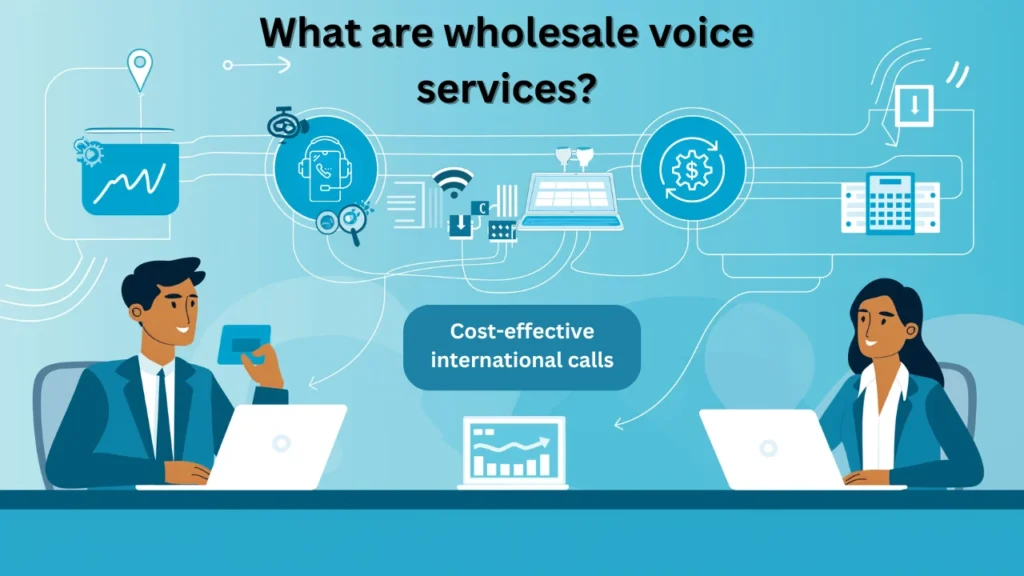
At its core, wholesale VoIP works like buying in bulk. Instead of purchasing single call minutes, businesses acquire large volumes of voice time, essentially securing dedicated pathways to specific countries or regions. These pathways are widely used by prepaid calling card providers and major contact centers. Minutes are often procured through intermediaries who connect multiple telecom networks—both traditional landlines and internet-based networks—ensuring calls are delivered efficiently and reliably to their final destinations.
Types of Wholesale Voice Services
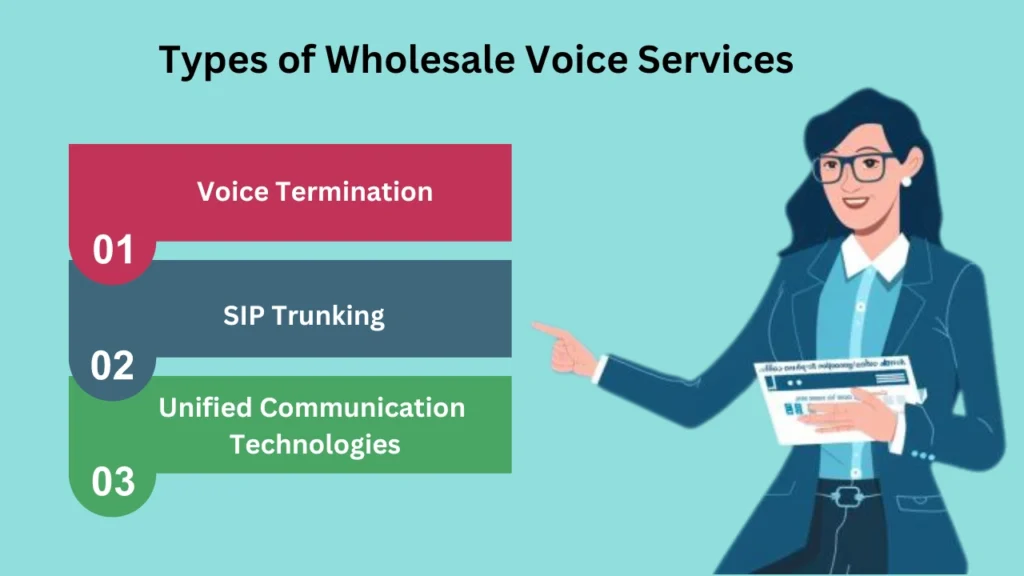
There are several types of wholesale voice, each designed for varying communication needs using sophisticated technology.
Voice Termination
Voice handover involves directing calls across network operators for ceaseless connection. Superior selections assure sharp sound reproduction and precise Caller ID (CLI) presentation. Employing entirely compliant “White Routes” instead of precarious “Grey Routes,” carriers confirm call arrival and forestall disruption, notably boosting client delight.
SIP Trunking
It employs IP networks to slick up talking, providing major dollar cuts versus older ISDN setups. It wipes out the requirement for distinct voice plus data nets, really shrinking physical gear outlays. Plus, steering by way of it grants supreme stretchiness, letting operations immediately bulk up their bones as they mature.
Unified Communication
It brings together voice, video, and messaging in one spot to ramp up how much gets done. These combined offerings make it simpler for teams to chat and speed up how work gets completed. By merging these ways of talking, organizations become more streamlined and step ahead of others in the marketplace.
Key Features of Wholesale Voice Services
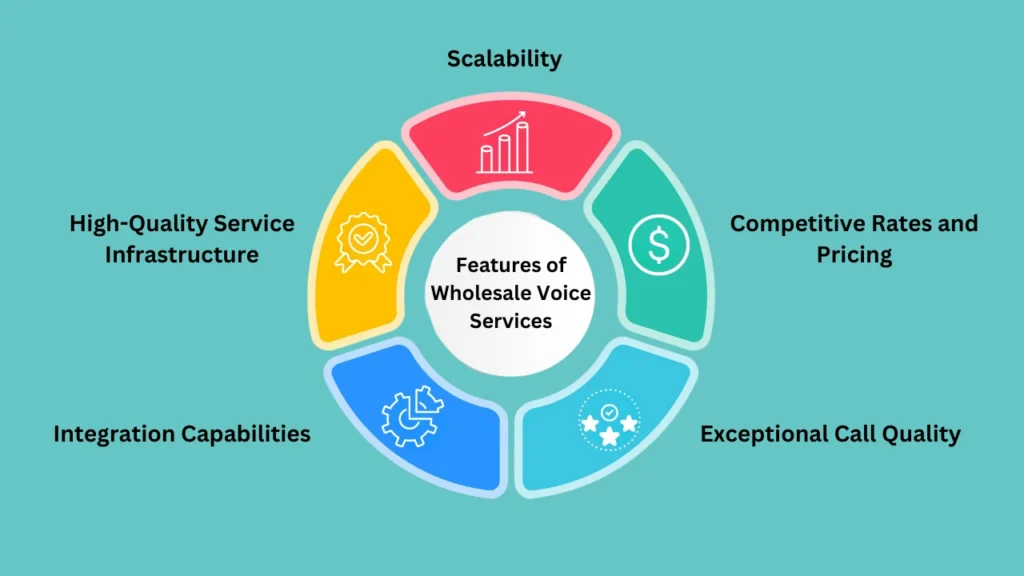
Key attributes of wholesale voice suppliers involve a sturdy service groundwork, agreeable tariffs, and—chiefly in 2025—smart routing features.
High-Quality Service Infrastructure
Solid underpinnings form the core of the business. Leading service providers employ mirrored server farms and direct link-ups with nearby carriers to reduce any delay. This solidifies a strong “ASR” (Average Connection Ratio)—a vital gauge reflecting the portion of calls that complete successfully.
Competitive Rates and Pricing
It presents adaptable cost frameworks it optimizes talking budgets. With choices such as pay-for-use or bulk reductions, the setup accommodates varied company dimensions. These pinch-hitting, expand-upon costs let big companies considerably lower running overheads while maintaining top-tier support.
Benefits of Wholesale Voice Services
The advantages of adopting dedicated wholesale voice services are numerous, offering businesses improved efficiency, cost savings, and enhanced communication reliability.
Cost-Effective Global Reach
A key advantage of dedicated wholesale voice solutions is access to “A-Z Termination” rates, allowing businesses to route calls to virtually any country at localized, cost-effective rates. Direct voice termination enables companies to bypass the high international long-distance fees typically charged by traditional telecom providers.
By leveraging economies of scale and bulk pricing, wholesale voice providers pass on these savings to their clients, helping businesses reduce overall communication costs by 30–40% while maintaining high call quality.
Seamless Global Coverage
Wholesale voice networks provide exceptional global connectivity. With a single SIP connection, businesses can reach customers in over 190 countries. The reliability of these networks ensures that calls are successfully completed, even in regions with developing infrastructure, as long as the carrier maintains strong local partnerships.
Role of Wholesale Voice in Unified Communications
Wholesale voice services serve as the invisible engine behind popular platforms like Microsoft Teams and Zoom Phone, enabling seamless, high-quality voice connectivity for users worldwide.

Driving Growth in Voice Carrier Market
Wholesale voice services form the backbone of the carrier industry. By separating the application layer from the network layer, developers can build communication apps without telecom expertise, driving the growth of CPaaS.
Diverse Solutions
Providers offer services like Cloud PBX reselling and DID hosting, enabling businesses to customize routing for specific needs, including HIPAA-compliant solutions.
Regulatory Compliance in Wholesale Voice Services
Regulatory compliance is now essential for survival. Providers must follow FCC regulations and standards like STIR/SHAKEN to maintain trust and call integrity.
Starting September 18, 2025, new FCC rules require strict third-party authentication. VoIP vendors that fail to sign traffic with valid tokens risk call blocking by major carriers. Meeting these requirements not only ensures reliability but also distinguishes premium carriers in the market.
Customized Voice Solutions for Businesses
Starting September 18, 2025, new FCC rules require strict third-party authentication. VoIP vendors that fail to sign traffic with valid tokens risk call blocking by major carriers. Meeting these requirements not only ensures reliability but also distinguishes premium carriers in the market.
Understanding Wholesale Voice
Grasping global connectivity is key to choosing the right solution. Wholesale VoIP includes origination (call initiation) and termination (call routing and completion). Understanding route tiers helps businesses select the appropriate quality level for their traffic.
Comparison of Route Tiers
Feature | Standard Routes (Non-CLI) | Premium Routes (CLI Certified) |
Caller ID Display | Not guaranteed (may show “Unknown”) | 100% guaranteed (displays verified number) |
Audio Quality (MOS) | Variable (standard quality) | High definition (crystal clear, 4.0+) |
Connection Speed | Slower (3–6 seconds) | Instant (under 1 second) |
Pricing | Lowest rates (economy) | Moderate rates (value for money) |
Ideal Use Case | Mass marketing, blast campaigns | Call centers, customer support, sales teams |
Deliverability | Moderate | High (least likely marked as spam) |
Understanding these distinctions allows businesses to choose the right tier for their use case.
Choosing the Right Partner Voice Termination Provider
When selecting a wholesale voice provider, prioritize clear call quality, low latency, and reliable connections. Testing the service firsthand or reviewing feedback from existing clients can help assess performance and overall satisfaction.Balancing technical reliability with user experience ensures the provider meets your business needs and supports long-term communication goals.
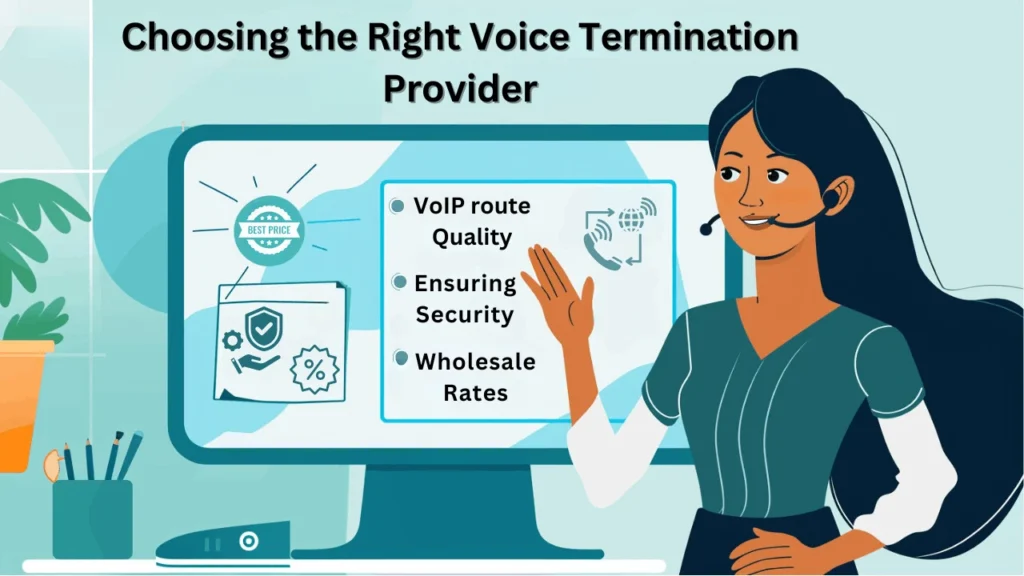
Pricing is a crucial factor—compare rates across providers and ensure there are no hidden fees. Equally important is the provider’s reputation. Choose a company known for excellent customer service and 24/7 NOC support to guarantee a smooth and reliable communication experience.
Impact of Latest Trends on Industry
The telecom industry is being reshaped by innovations such as advanced routing technologies, which enhance service delivery and reliability.
The adoption of cloud-based solutions allows for greater scalability, while AI and machine learning enable providers to offer personalized services and predictive analytics, identifying potential network issues before they affect end users. These trends are transforming both the quality of services and how providers interact with their clients.
Improving VoIP Route Quality
Maintaining high call quality is essential for reliable communication, requiring investment in advanced technology and robust infrastructure.
Implementing Quality of Service (QoS) protocols helps prioritize voice traffic, ensuring smooth and uninterrupted calls. Additionally, Session Border Controllers (SBCs) manage and secure network connections, reducing latency and packet loss for a superior calling experience.
Key Challenges for VoIP Route Providers
VoIP operators face key challenges such as maintaining call quality, ensuring security, and optimizing call routing.
Consistently high call quality is essential to prevent customer dissatisfaction. Security is critical due to the transmission of sensitive data over IP networks. Optimizing routing also requires careful management. Providers address these challenges using Quality of Service (QoS) protocols and advanced routing algorithms to ensure reliable, secure, and efficient communication.
Exploring Voice Termination and Wholesale Rates
Understanding voice termination options and wholesale rates requires familiarity with pricing models and provider offerings.
Rates typically depend on call volume, quality, and destination, and providers may offer different pricing structures. To select the right partner, businesses should assess their specific needs and confirm there are no hidden or additional fees, ensuring cost-effective and reliable communication.
Leading Wholesale Voice Service Providers
Top wholesale voice providers offer a variety of solutions to meet diverse communication needs. While legacy carriers like Verizon and Ribbon provide stability, the market increasingly favors agile aggregators.
Modern providers stand out through robust global networks that ensure high-quality international termination. By leveraging advanced technology, they deliver platforms that enhance operational efficiency, scalability, and reliability for businesses of all sizes.
Conclusion
Wholesale voice services have become essential for businesses managing high-volume and international calls. This guide has highlighted their key functionalities and advantages, from cost savings to reliable global connectivity.
By leveraging economies of scale and competitive pricing, businesses can reduce communication expenses while maintaining seamless, high-quality connections. Embracing wholesale voice solutions enables organizations to optimize communication strategies and achieve cost-effective, dependable connectivity, driving success in today’s global market.