Introduction
VoIP providers empower modern businesses with cost savings and unmatched flexibility for remote work. By leveraging robust wholesale VoIP infrastructure, these services deliver seamless connectivity and advanced tools like CRM integration to boost productivity. Choosing the right partner is critical for ensuring reliable, secure communication. This guide covers the essential factors to help you select the best solution to stay competitive.
Key Takeaways
- Affordable Communication Solutions: Reliable services provide cost savings and enhanced flexibility.
- Efficiency: The best business systems streamline communication processes, helping companies improve productivity.
- Features: Leading vendors offer a diverse range of features to cater to unique industry needs.
- Reliability: High-quality voice termination ensures that calls connect instantly and clearly without latency.
- Connectivity: Cloud telephony enables businesses to maintain seamless connections regardless of location.
What is VoIP Providers?
VoIP providers are specialized services that allow users to make voice calls over the internet rather than using traditional analog phone lines (PSTN). This technology has changed how businesses talk to each other, offering a solution that is more flexible and cheaper than old phone services. Unlike traditional carriers that require heavy on-premise hardware, modern platforms deliver services through the cloud, known as “Hosted PBX.”

One big plus of using these digital solutions is saving money. Switching to IP telephony can cut down on phone costs significantly. This is especially true for companies that communicate with clients in other countries. Service vendors like Acepeak leverage global wholesale voice networks to route calls efficiently at a fraction of the cost of traditional long-distance carriers. By bypassing legacy infrastructure, businesses can reallocate their budget to other growth areas.
How VoIP Works: The Technical Breakdown
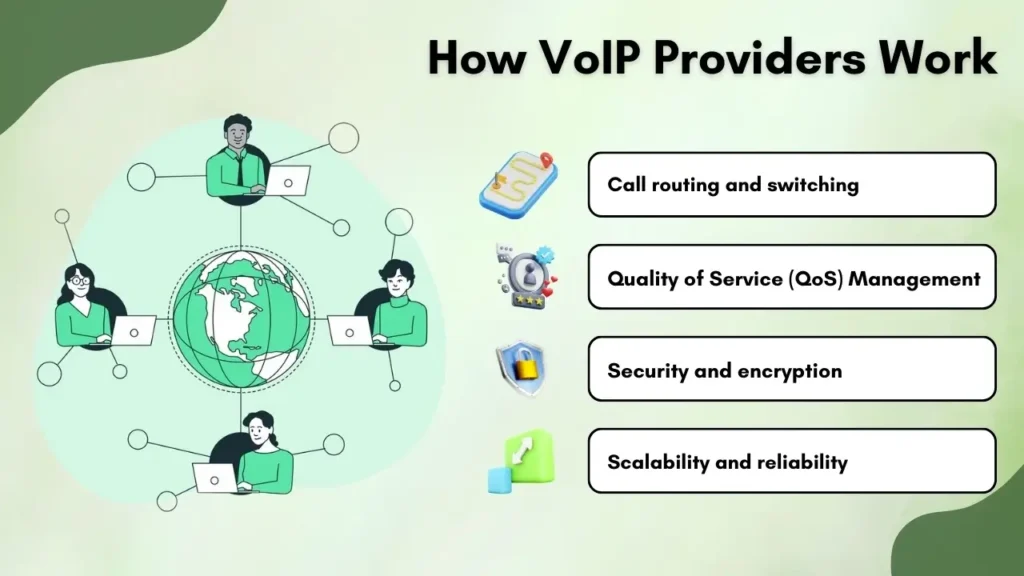
VoIP turns voice signals into digital data packets, compresses them, and sends them over the internet. This process allows businesses to use features like video calls, call forwarding, and voicemail-to-email—things traditional phones simply can’t do.
The Role of Codecs and Packets
When you speak into a cloud-enabled phone, “Codecs” (Coder-Decoder) convert audio into data. These packets travel across the web to the recipient. However, for the call to ring on a standard phone line at the other end, it requires a process called VoIP termination.
Understanding VoIP Termination
Crucial to the calling process is VoIP termination. This is the technology that routes the call from the internet to the final destination, whether that is another IP device or a traditional landline. Without high-quality VoIP termination, calls would drop, suffer from “jitter,” or have poor audio quality. Therefore, understanding how your partner handles this routing is key to ensuring business continuity. The best companies do not cut corners here; they ensure their termination routes are direct and stable.
The Hidden Backbone: The Role of Wholesale Infrastructure
While the end-user sees a user-friendly app or a desk phone, the backend is powered by complex relationships between retail brands and VoIP wholesale providers. Understanding this helps businesses choose a better service.
VoIP wholesale providers are the entities that own the massive networks and infrastructure required to carry voice traffic across continents. Retail carriers purchase minutes and bandwidth in bulk from these wholesalers to serve their clients.
- Quality Assurance: If your chosen platform partners with Tier-1 voice wholesale providers, your calls take the fastest, most direct path to their destination.
- Cost Management: The competitive rates you pay are often a result of the vendor securing good deals on wholesale VoIP traffic.
- Global Reach: Wholesale voice networks allow a small business in New York to call a client in Tokyo as clearly as if they were next door.
Key Benefits of Using VoIP Providers for Your Business Communication
Switching to IP telephony brings many benefits to businesses. It is a great choice for companies wanting to improve their communication systems. One big advantage is saving money. By utilizing wholesale VoIP rates, platforms can offer significantly lower prices for international and domestic calls compared to traditional carriers.
Another plus is scalability. As businesses grow, their communication needs change. The system can adjust easily to these changes, allowing companies to grow without spending a lot on new hardware. Plus, features like voicemail-to-email and video conferencing make teamwork better.
Cost-Effectiveness and Scalability
- Reduced Operational Costs: No need for expensive on-premise maintenance or PBX hardware upgrades.
- Optimized Routing: Wholesale voice routes ensure international calls are affordable.
- Instant Scaling: Add 10 or 100 new users in minutes via a web portal.
- Unified Billing: Consolidate video, voice, and messaging into one monthly subscription.
Top Features to Look for in VoIP Providers: What Makes a Good Service?
When picking a partner, look for certain key features. These features greatly impact the service quality and your business experience. The top VoIP providers have features that boost your communication and ensure stability.
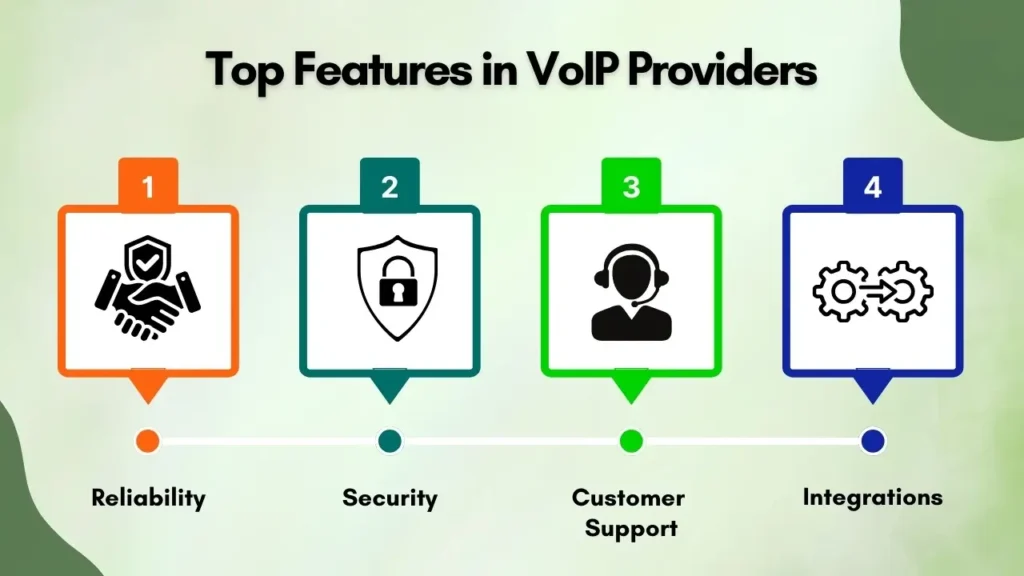
A reliable service should offer crystal-clear audio quality. This is largely dependent on the VoIP termination routes the vendor uses. If they use Tier-1 routes, your audio will be flawless. Additionally, look for advanced call management features such as call forwarding, voicemail to email, and call waiting.
Important features include:
- Reliability: Vital to have little downtime, ensured by redundant voice wholesale providers.
- Security: Encryption, fraud prevention, and compliance with laws like HIPAA and GDPR.
- Customer Support: 24/7 support is essential for troubleshooting.
- Analytics Dashboard: View call volume, duration, and agent performance in real-time.
- Mobile App Parity: The mobile app should have all the features of the desktop version.
VoIP Providers vs. Traditional Phone Services: A Comparison
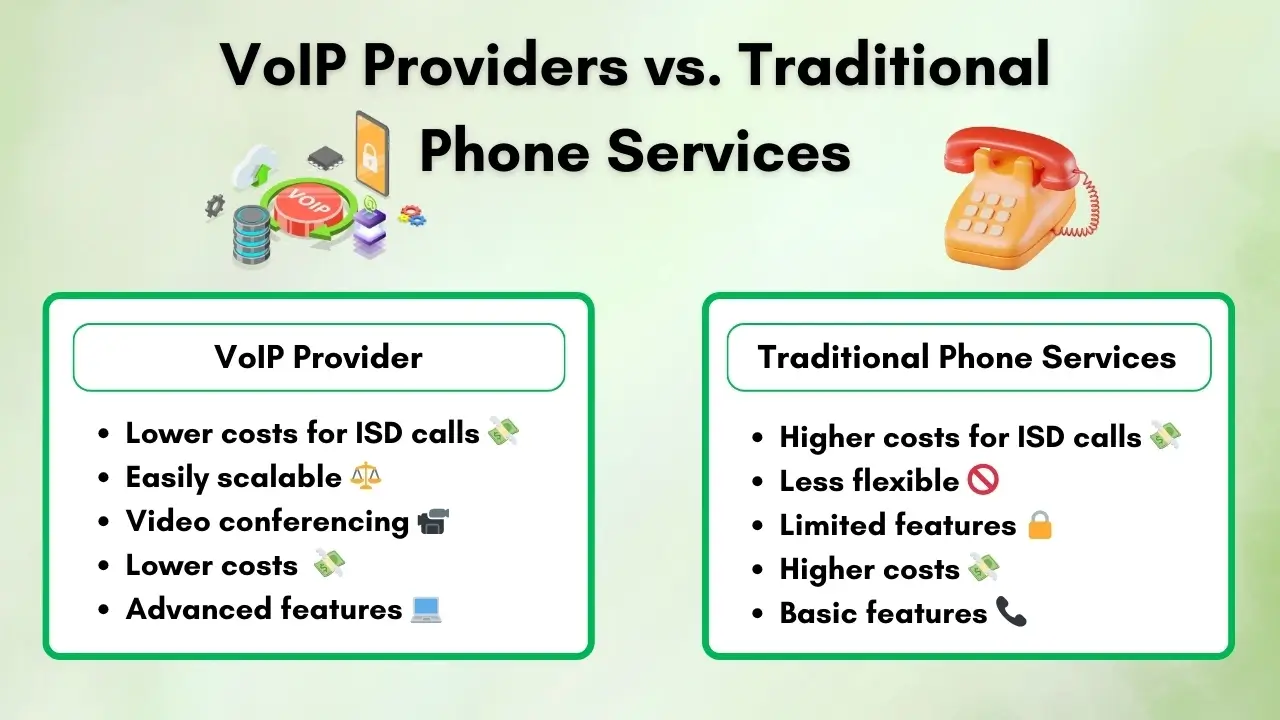
Companies often face a tough choice between VoIP providers and traditional phone services. While traditional phones are familiar, cloud voice brings modern benefits.
Cloud solutions usually cost less because they utilize the internet and wholesale voice markets rather than maintaining expensive physical copper lines. Below is a comprehensive comparison of the two systems.
| Feature | Traditional Phone Services (Landline) | VoIP Providers (Cloud) |
| Primary Technology | Analog signals over Copper Wires (PSTN) | Digital Packets over Internet (IP) |
| Cost Structure | High hardware & maintenance costs; expensive international calls | Low subscription fees; cheap international rates via VoIP termination |
| Scalability | Difficult; requires physical installation of new lines | Instant; add users via software click |
| Mobility | Tethered to a desk | Work from anywhere (Mobile, Laptop, Tablet) |
| Features | Basic voice, hold, and caller ID | Advanced (Video, CRM integration, AI analytics) |
| Disaster Recovery | Lines can be physically cut by weather/accidents | Calls automatically rerouted to mobile devices |
| Backend Support | Local Exchange Carrier | Global VoIP wholesale providers |
How to Choose the Right VoIP Provider: Key Factors to Consider
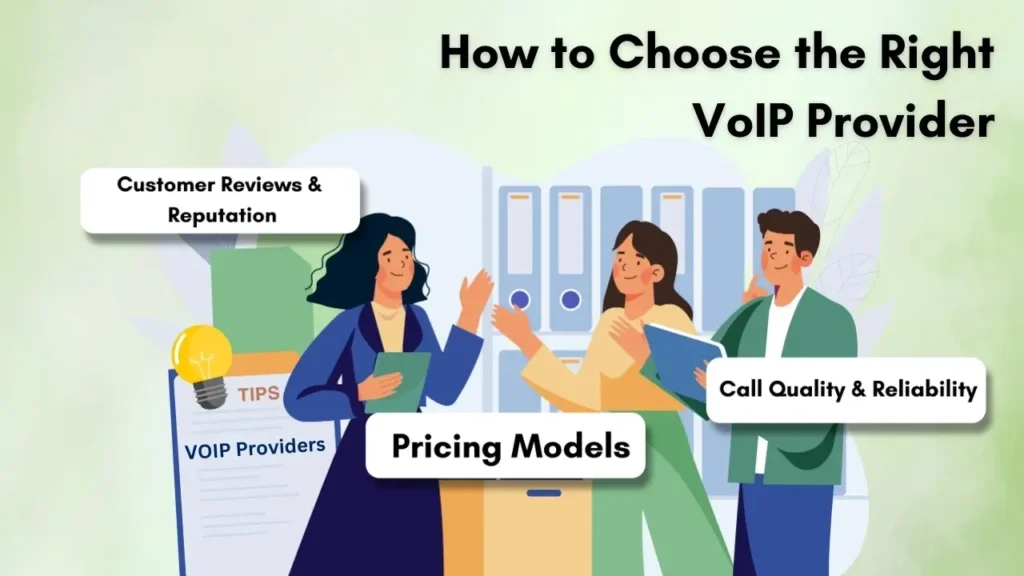
Choosing the right VoIP provider is crucial for your business. Look at their pricing, call quality, and reputation.
Pricing Models
Vendors have different pricing. You can choose from per-user, per-minute, or flat-rate plans. Often, the per-minute rates are influenced by the wholesale VoIP market, so checking if your partner passes these savings on to you is smart. Be wary of “unlimited” plans that have strict fair-use policies; sometimes a metered plan based on transparent voice termination rates is cheaper for low-volume businesses.
Call Quality and Reliability
It’s important to check network performance. Companies like Acepeak have a strong network and partner with top-tier VoIP wholesale providers to ensure connection stability. This ensures that the voice termination process happens smoothly without latency or jitter. Ask potential partners about their “Packet Loss” and “Jitter” statistics.
Customer Reviews and Reputation
Check what others say about a service through reviews. This tells you about their reliability and if they truly deliver on their promises regarding uptime and support. Look for reviews that specifically mention “call clarity” or “connection speed,” as these indicate the quality of their wholesale voice backbone.
Setting Up VoIP with Your Chosen Provider: A Step-by-Step Guide
After picking a suitable partner, setting up your system is key. The process ensures you can communicate without any hitches.
Initial Setup and Configuration
First, you’ll need to install hardware like phones or set up software apps. Next, you will configure call routing. This is where the vendor connects your internal system to the external voice termination points, allowing you to dial out to the world. You will also set up your “Hunt Groups” (who receives the call first) and “IVR” (Interactive Voice Response – press 1 for sales, 2 for support).
Testing Your VoIP Setup
Once your system is set up, it’s time to test it. Make test calls to check the call quality. If there is static, it might be an internet issue or a routing issue with the voice wholesale providers used in the backend. Regular tests help spot and fix these issues early.
Common Challenges with VoIP Providers and How to Overcome Them
Choosing VoIP providers can be challenging due to potential call quality issues, security risks, and internet reliance. However, these hurdles have simple solutions.
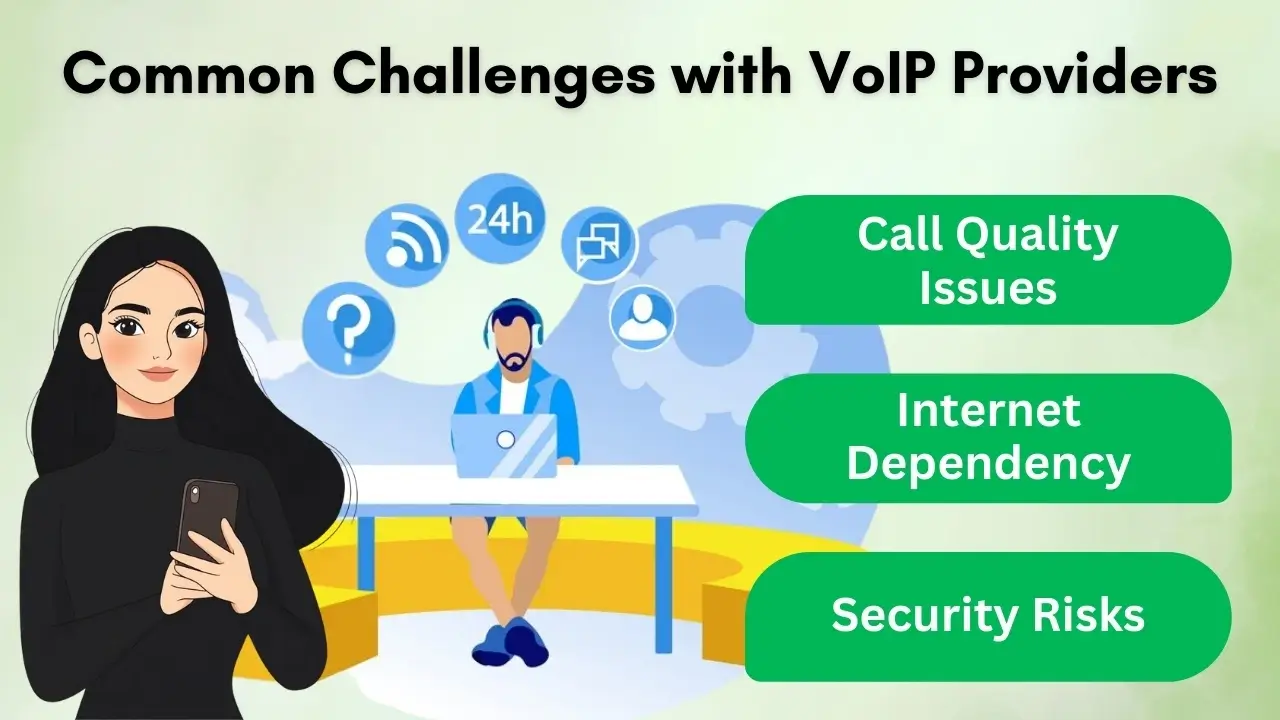
Latency and Jitter Poor audio usually stems from unstable internet or weak termination routes. Fix this by enabling Quality of Service (QoS) on your router to prioritize voice data and ensuring your vendor utilizes high-quality, direct routes.
Security Vulnerabilities Risks like “toll fraud” occur when hackers make unauthorized calls. Prevent this by using strong encryption and passwords. Additionally, choose a partner that actively monitors network traffic to detect and block fraud instantly.
Internet Dependency Since VoIP relies on connectivity, outages stop service. The best solution is a backup LTE/5G connection. Modern routers with “Failover” capabilities can automatically switch to this backup line if the main fiber connection fails.
Conclusion
The business world is always changing, and good communication is key. Cloud-based voice services are now the top choice for companies looking to improve their communication. They offer efficient, cost-effective, and flexible solutions that traditional phone lines simply cannot match.
Working with top-tier partners like Acepeak brings many benefits, primarily because they leverage wholesale VoIP networks to keep costs down while keeping quality high. With features like video calls, AI integration, and seamless voice termination, teams can collaborate more efficiently than ever before. Now is the best time to see what these digital solutions can do for your business and ensure your communication infrastructure is ready for the future.